
People hate change
and software projects.
Here's a book
about how to fall
in love with both.
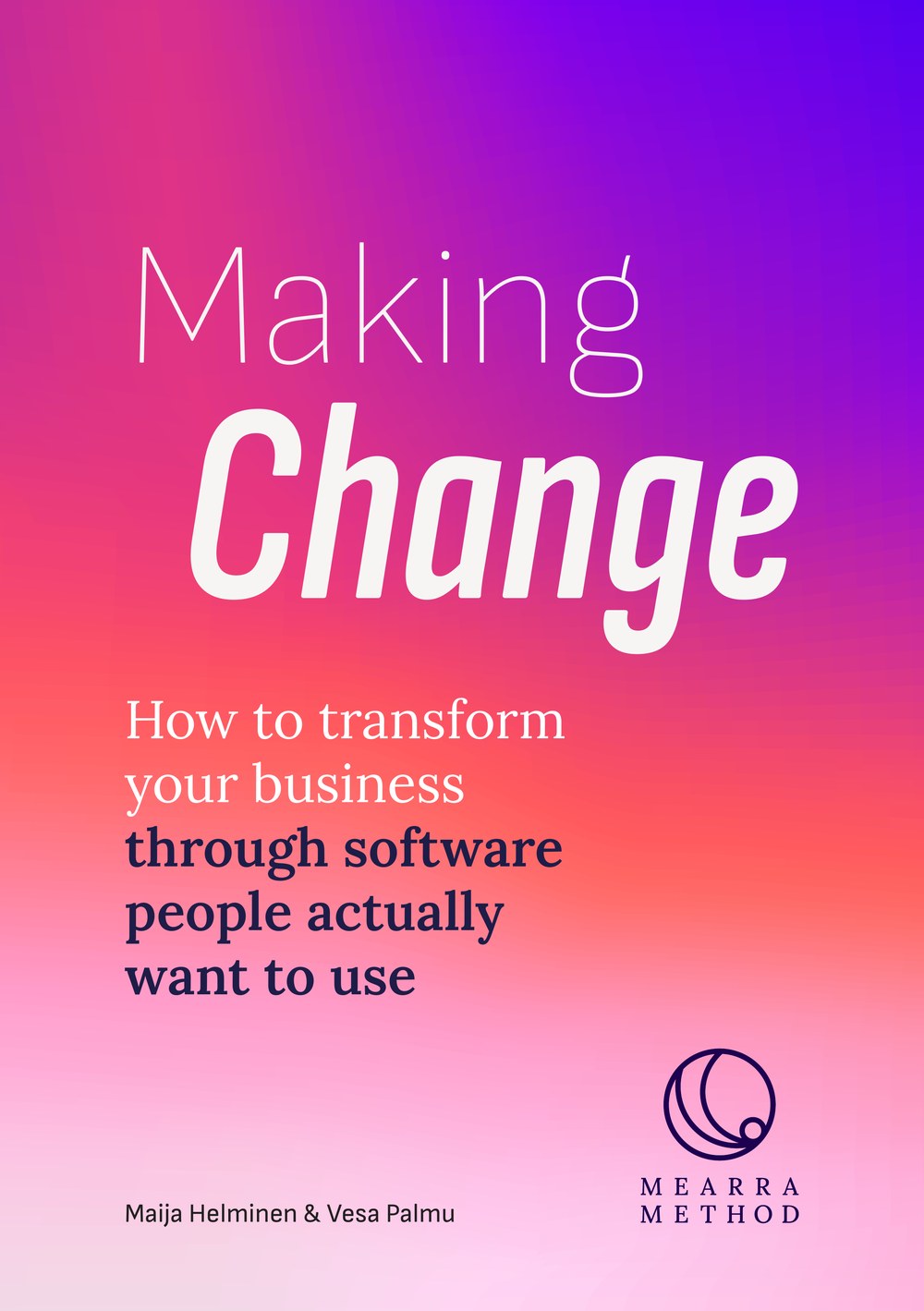
From the back cover
Everyone hates change and software projects — usually because one stalls the other.
Making Change offers a process that goes beyond agile, where change is baked into the software as it's being built. It's a manual for business people, consultants, and anyone who's watched a good solution fail on impact — even before AI made building software faster than ever.
The book introduces the Mearra Method through bunnies, bakers, boyfriends and broken barriers, featuring one fictional company failing spectacularly at every turn. So when it comes to figuring out how to make change in the AI era, you don't have to.
- Authors
- Maija Helminen & Vesa Palmu
- Published
- 2026, in English
- ISBN
- 978-952-88-2497-8
- In stores
- In the coming weeks
01The hook
Uncertainty shrinks the moment you can touch the work.
The AI era dials the uncertainty up on every kind of work — more moving parts, fewer fixed answers, and a constant feeling that the ground is shifting. Every software project already demanded a tolerance for that fog nobody quite has. It has felt like a magic show instead of a clear process; something happens somewhere and out comes the rabbit. But it shouldn't be like that.
02The turn
For the first time, the audience can get on stage.
AI just collapsed the cost of visualising and building working software. What used to take months of slides, specs and guesswork can now be prototyped in days — real, clickable, running software the people who'll actually use it can try, react to, and reshape before a single line is locked in. That small shift quietly rewrites how decisions get made, who gets a say, and what your money actually buys.
We call it the Mearra Method. The book is the rest of that sentence.
03The model
Understand. Align. Commit. Make.
Four steps, repeated for every phase of a project. When a phase goes live, the circle returns to Understand; Understand and Align run again if needed, then the next Commit starts the next phase.
New ideas keep coming during Make. Instead of sneaking into a sprint, each one goes where it belongs:
- Small
- Minor changes that don't alter the size of the scope. Built inside the current phase.
- Good
- Good ideas that don't fit the phase. Returned to Align and added to the Moonshot, the shared vision, for future phases.
- Strange
- Interesting ideas we're not sure will work. Returned to Understand, where they're analysed.
04A peek inside
A few of the things we get into.
Touch the Software on Day One
Why working software belongs at the start of the project, not at the end of the design phase.
Software Belongs to the Business
What changes the moment the people who use it, not IT, own the thing they depend on. (And why budgets suddenly get easier to defend.)
Beyond Agile
The old rituals go, replaced by AI-era versions that cut misunderstandings and ship faster.
A Process Anyone Can Step Into
Building software shouldn't require a translator. How to make the method accessible to everyone in the room.
05The shift
Less theater. More shipped.
Stop paying for software you never quite get.
Fewer nasty surprises, fewer change-request invoices, budgets that behave.
Build things people actually use.
Adoption stops being the afterthought that quietly kills projects — the people who'll live with the software help shape it, so they champion it instead of resisting it.
Get a room full of stakeholders to genuinely agree.
Turn “I'll know it when I see it” into decisions everyone understands and owns.
Make AI pay off in your business — not just your codebase.
Speed at the keyboard was never the prize; this is about what that speed finally lets your business do.
See the costs the demo hides.
Know the real number — including what happens long after launch — before you commit, so the figure you take to the board actually holds up.
Walk into your next software decision in control.
Know what to ask, what a good answer sounds like, and where the risk really lives.
Lead your people through the disruption without losing them.
Who wins, who loses, and what a decent organisation owes the people the change leaves behind.
“We'd rather make change something people choose than something they survive.”
The Mearra Method
06The authors
A bubbly business designer and a grumpy CEO walk into a sales meeting.
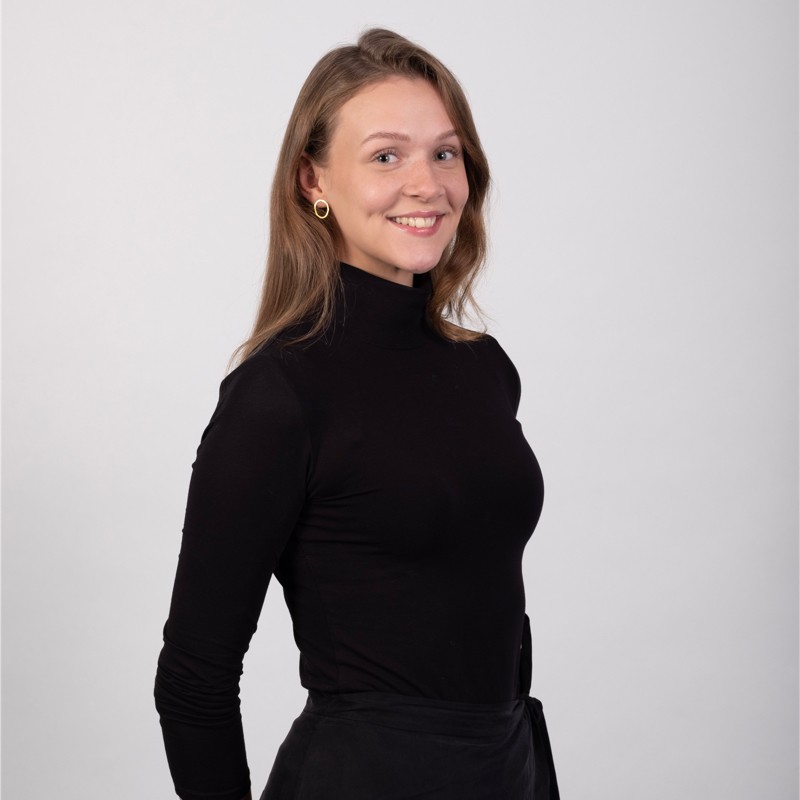
Maija Helminen
Educational scientist turned business designer. Believes progress should be accessible to everyone, and has never met a piece of gatekeeping she didn't want to call out.
Vesa Palmu
Computer scientist and CEO with ~30 years in software. Has watched every hype cycle come and go, and stays productively sceptical about this one too.
Both work at Mearra (opens in a new tab), where the method was built — and tested on real projects, with real budgets and real consequences.
07Who it's for
Read it if…
…change feels impossibly hard, and you wonder why, in 2026, there still isn't a better way.
…"agile" stopped meaning anything useful in your organisation.
…you've watched a good solution fail on impact, and still can't quite say why.
…you want your software project to actually land — something people adopt and keep using, not just something that ships.
Half for the people deciding what to build. Half for the people building and securing it.
08Coming to a bookstore near you
Out goes the magic show,
enter Mearra Method.
The book is out, and it reaches bookstores in the coming weeks. Leave your email and we'll tell you the moment you can get your copy.
Curious about the method in practice? → mearra.com (opens in a new tab)